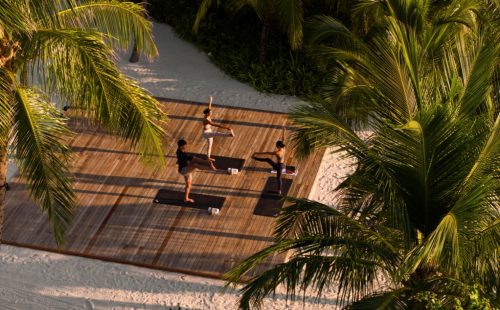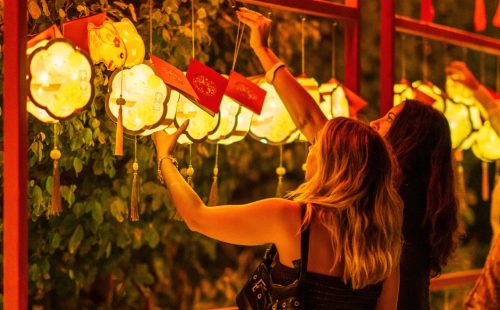
There are islands shaped by landscape, and others shaped by ideas. At Patina Maldives, Fari Islands, the two exist in constant dialogue, where art, design and place are inseparable.
Here, the island unfolds less as a destination than as a cultural landscape, where sculpture, light, material experimentation and artist residencies are woven into daily life. Art is not encountered in designated spaces alone, but across pathways, shorelines and moments of pause, transforming the island into what feels, in effect, like a living gallery.
This begins with the permanent collection.
Spread across the island, eight major works create an archipelago of artistry, each inviting not simply observation but engagement. Some ask to be contemplated quietly; others alter the way one moves through the landscape itself.
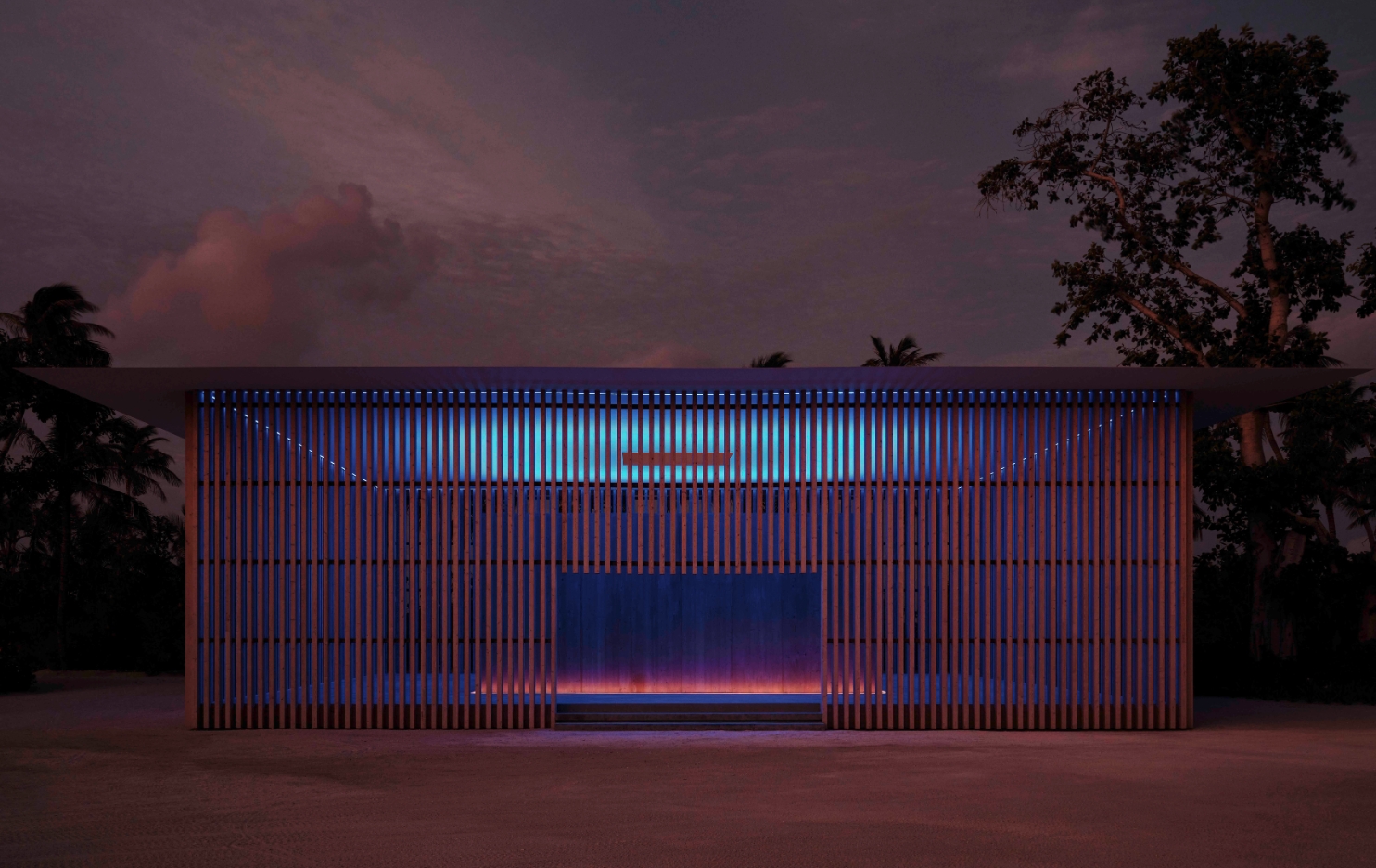
Perhaps nowhere is this more profound than in Skyspace Amarta by James Turrell. Part sculpture, part perceptual experience, the work frames the Maldivian sky as a living medium, shifting with light, atmosphere and time. At dawn and dusk, it becomes almost meditative, drawing viewers into a heightened awareness of colour, horizon and the elemental relationship between sea and sky.
It is art experienced not as an object, but as a condition.
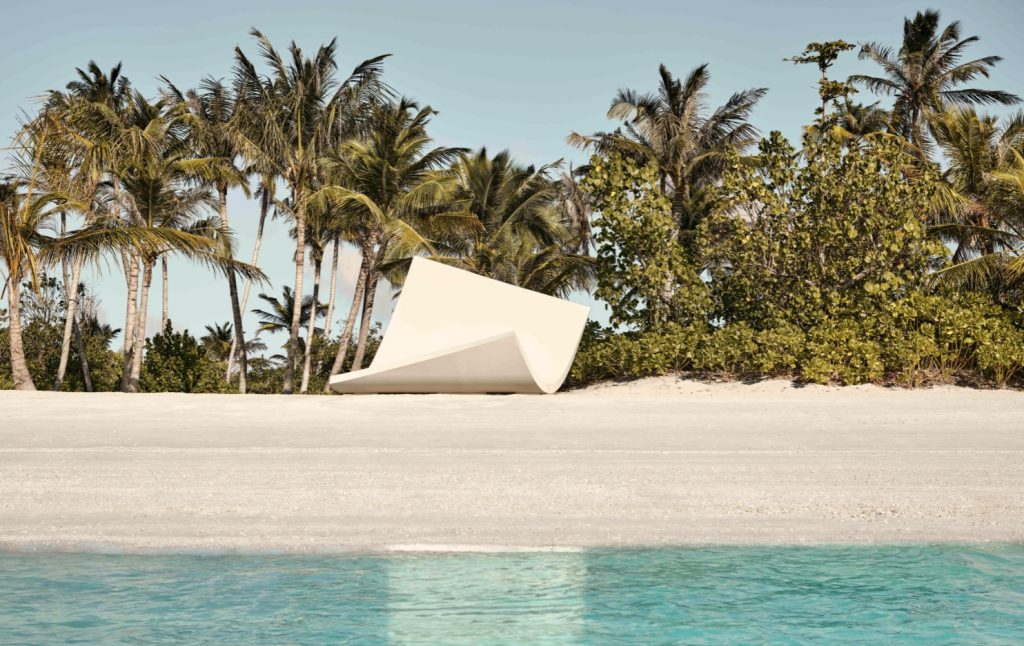
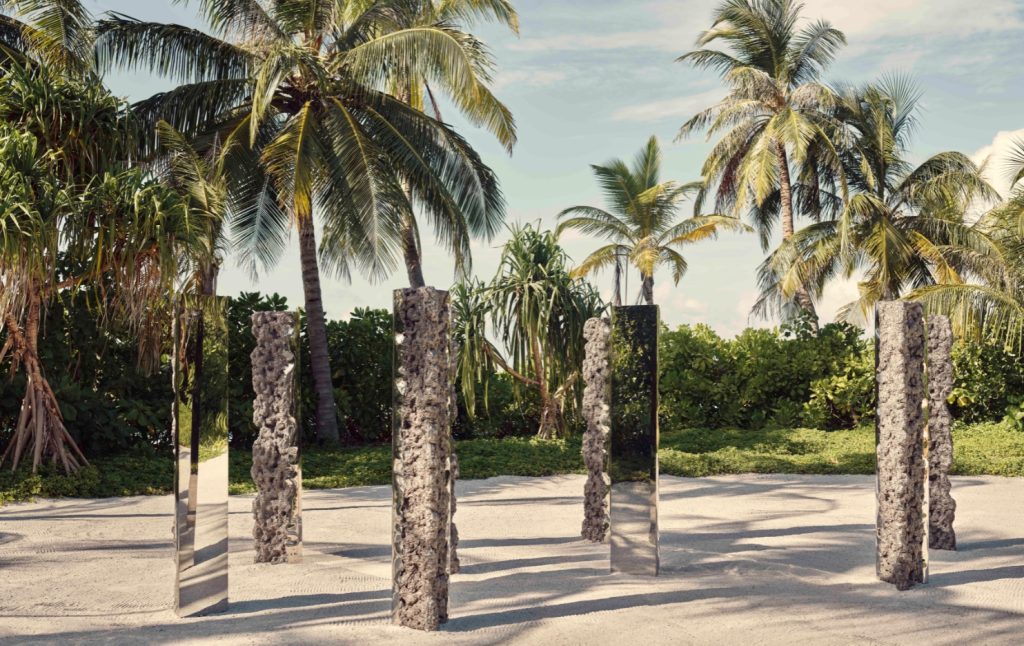
Elsewhere, works such as Synthesis Monoliths, Home Deep Blue and Los Limites de lo Posible IX continue this dialogue between material and environment, blurring natural and artificial, order and instability, permanence and flux. Even photography and textile works are positioned not as decoration but as interventions, shaping the way the island is read.
What makes this collection distinctive, however, is not scale but context.
These works are lived alongside.
One encounters them en route to breakfast, passing through gardens, or lingering after sunset. They become part of the island’s rhythm, folding art into ordinary acts of inhabitation.
That sensibility extends beyond the permanent collection through the Patina Art Residency, an annual programme supporting emerging artists whose practices engage with impact and sustainability. Rather than treating art as something acquired, Patina positions creation itself as an evolving presence, allowing new ideas and cultural perspectives to take temporary root on the island.
It reinforces a broader proposition: that a resort can operate not only as a sanctuary, but as a site of cultural production.
Material culture carries this idea further. Across interiors, design objects, artworks and handcrafted details sit within a shared visual language shaped by tactility, craftsmanship and restraint. Nothing feels overly curated, yet everything feels intentional.
Even works engaging ecological urgency, such as Ocean Archaeology of Our Time, sit naturally within this framework, linking aesthetics with environmental consciousness rather than separating them.
There is, throughout, a quiet refusal to treat art as accessory.
Instead, it becomes part of how the island thinks.
And that may be what distinguishes Patina Maldives most. Not simply the presence of art, but the way art is allowed to permeate experience, through perception, conversation, materiality and encounter.
In that sense, Patina is not merely a place to stay surrounded by art.
It is a place where art is inhabited.