There are many ways to arrive in the Maldives. Some are dramatic. Others are fleeting. At The Ritz-Carlton Maldives, Fari Islands, the journey begins with something far more elemental.
A conch shell sounds across the jetty as guests step onto the island. The ancient Maldivian Sangu call, once used to mark important moments in island life, echoes across the lagoon, both welcome and invitation, a signal that the rhythm of the outside world is about to soften.
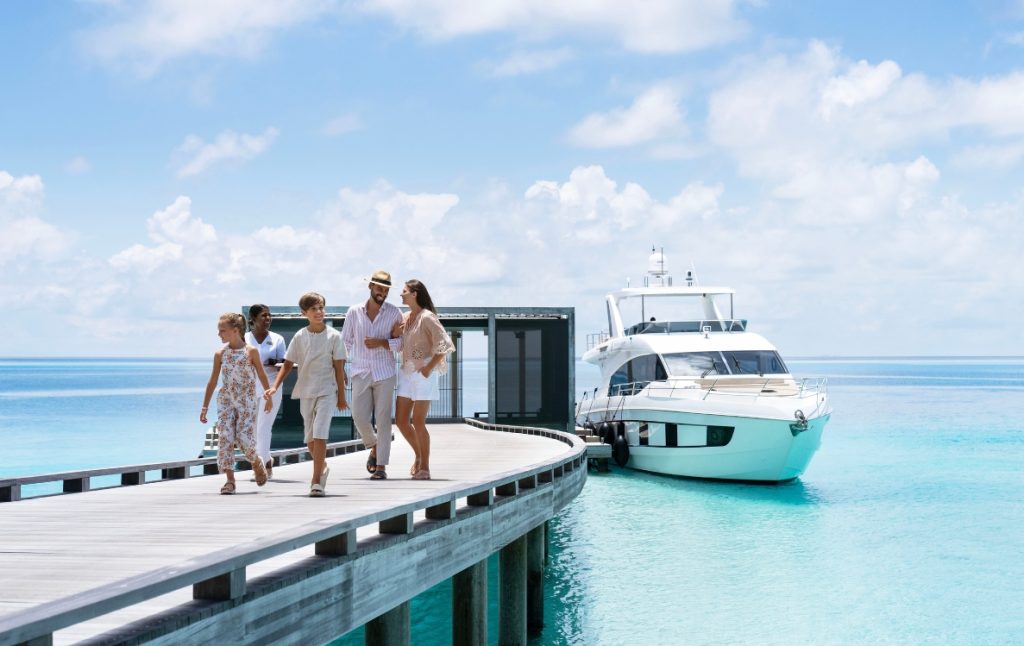
Just 45 minutes by speedboat from Velana International Airport, the resort sits within the Fari Islands archipelago. Here, private island seclusion is balanced with the energy of Fari Marina Village, where guests drift between restaurants, boutiques and art installations before returning to the calm of their island retreat.
Yet the experience of The Ritz-Carlton Maldives Fari Islands is shaped less by what surrounds it and more by the rhythm that defines it.
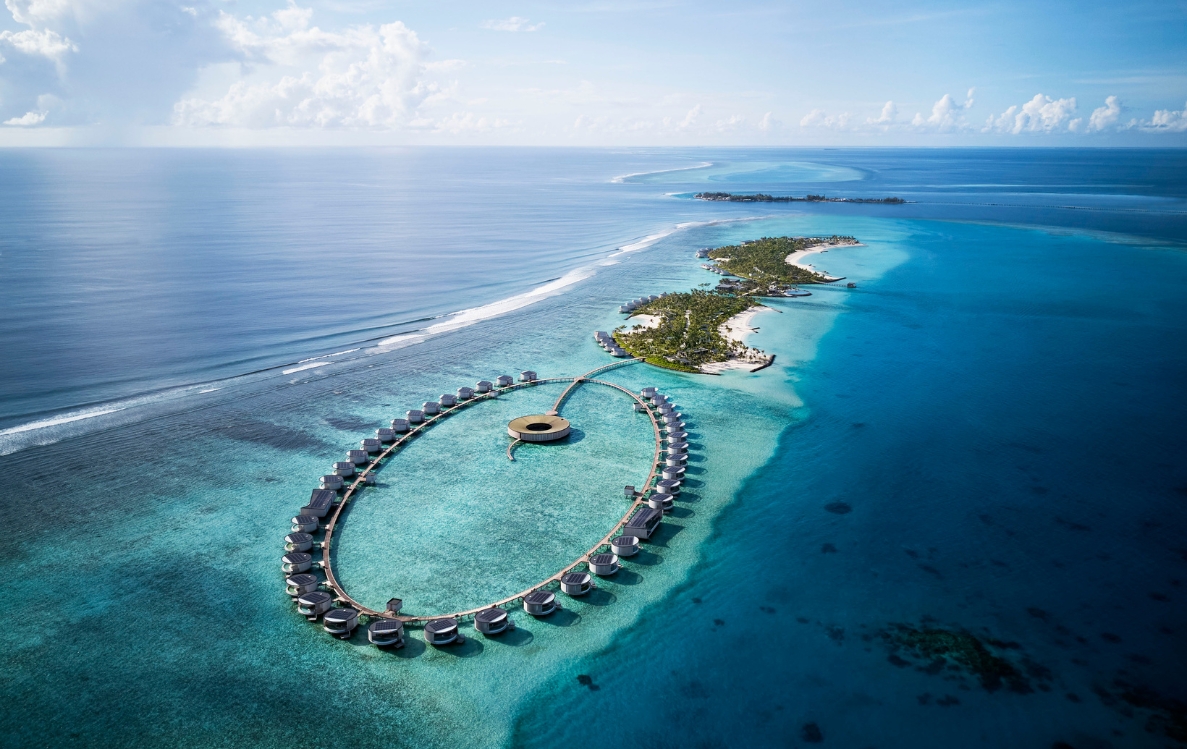
Across the lagoon and shoreline, one hundred villas unfold as private residences suspended between sea and sky. Some hover above the water, opening directly onto endless ocean views. Others sit quietly along the beach, framed by palms and soft white sand. In both, the line between indoors and outdoors dissolves, allowing the island to move naturally through each space.
Small details reinforce this sense of living rather than staying. Bicycles wait beside each villa. Outdoor lounges extend the rhythm of the day. Even the view from the bed shifts with the light, changing from morning brightness to evening calm.
This same sense of rhythm extends beyond the villa itself.
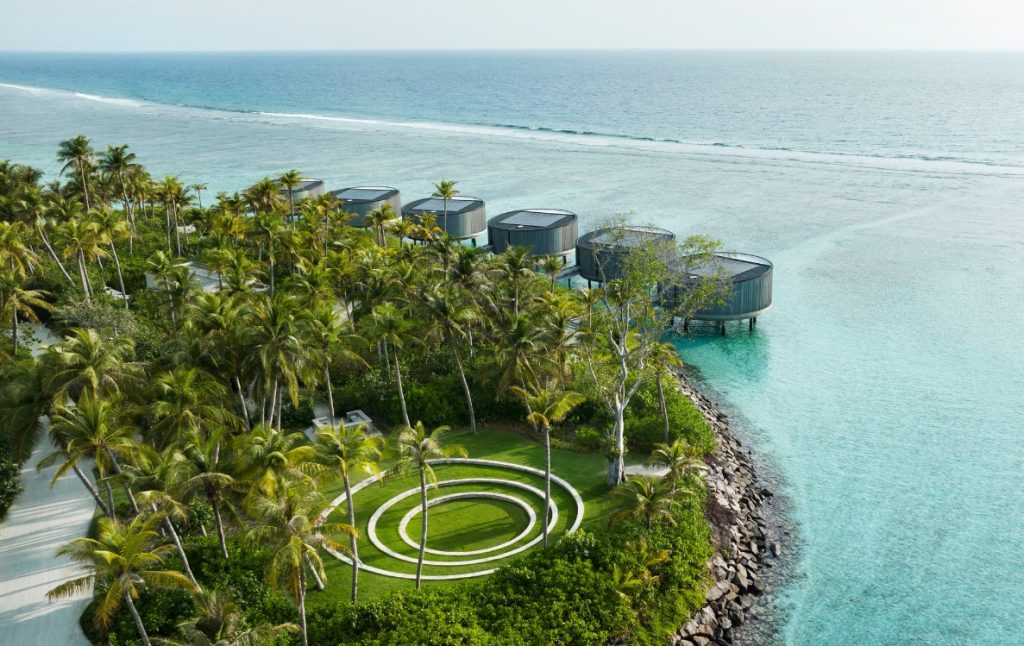
Designed by Kerry Hill Architects, the resort draws inspiration from the movement of the ocean, expressed through circular forms that echo throughout the landscape. Villas arc gently across the lagoon, walkways curve through the island, and open spaces flow into one another with a sense of quiet continuity. Guided by its philosophy Embrace the Circle of Island Life, the resort’s concept reflects the natural rhythms of tide, light and time that shape daily life here.
This sense of flow extends beyond architecture. Even the island’s art collection, with more than one hundred contemporary works, reflects the textures and movement of water, reinforcing a visual language that feels both considered and instinctive.
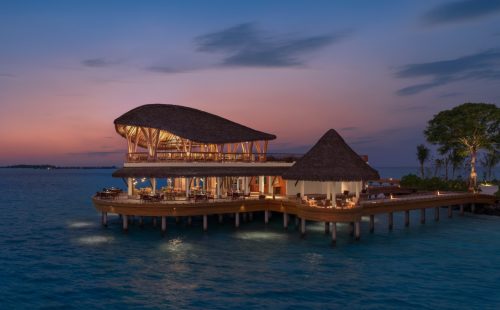
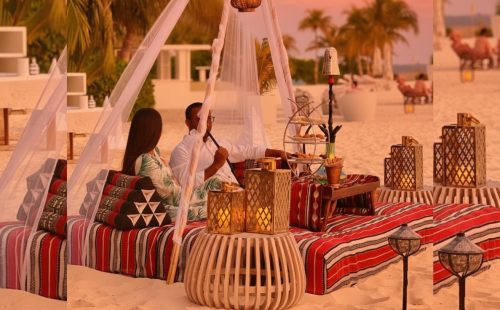
Dining, wellness and experiences unfold as part of this same rhythm. Across the island and marina village, restaurants offer a range of global flavors shaped by their surroundings, while The Ritz-Carlton Spa introduces a more contemplative pace within its circular overwater sanctuary.
As sunset approaches, however, the island gathers for a moment that brings everything into focus.
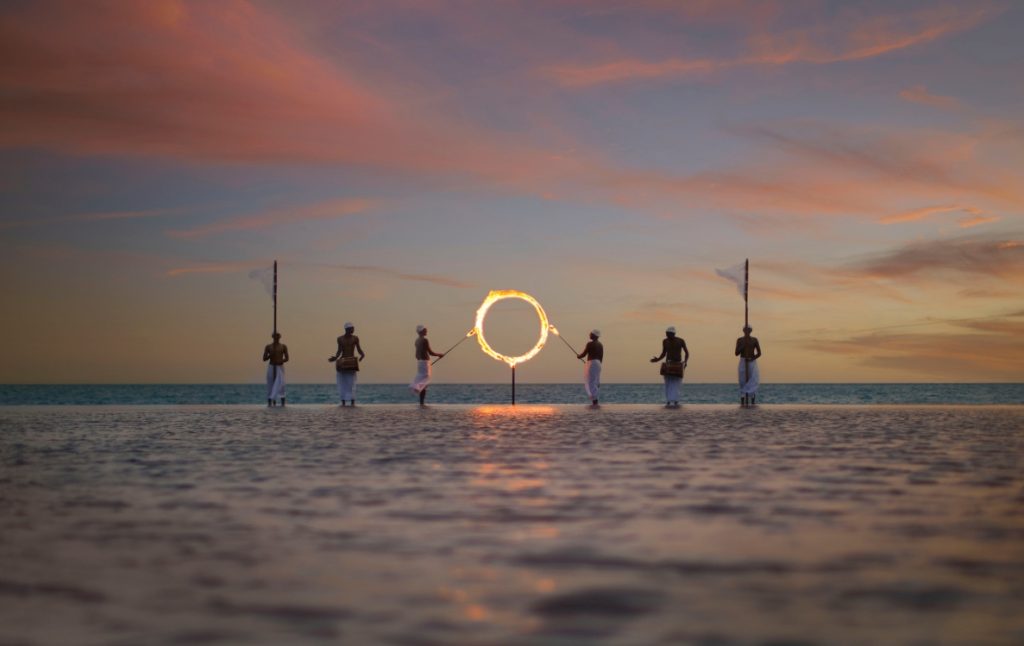
At EAU Bar beside a circular infinity pool, the daily Defining Moment begins. Bodu Beru drummers move through the space as torches are lit, their rhythms echoing across the lagoon before a final flame marks the close of day. Rooted in Maldivian tradition yet distinctly contemporary, it is a ritual that captures the spirit of the island, a quiet transition from movement to stillness.
Elsewhere, younger guests find their own rhythm through Ritz Kids, the resort’s dedicated space for younger explorers.
Beneath the calm beauty of the island lies an equally thoughtful commitment to sustainability. From the outset, Naturalists studied ocean conditions to minimize impact on coral reefs, while construction prioritised responsible materials and achieved EDGE certification. Today solar energy, plastic-free water systems, coral restoration projects and partnerships with the Olive Ridley Project help protect the marine ecosystem surrounding the resort. For guests, these initiatives appear not as technical programs but as quiet evidence of respect for the fragile environment that surrounds the island.
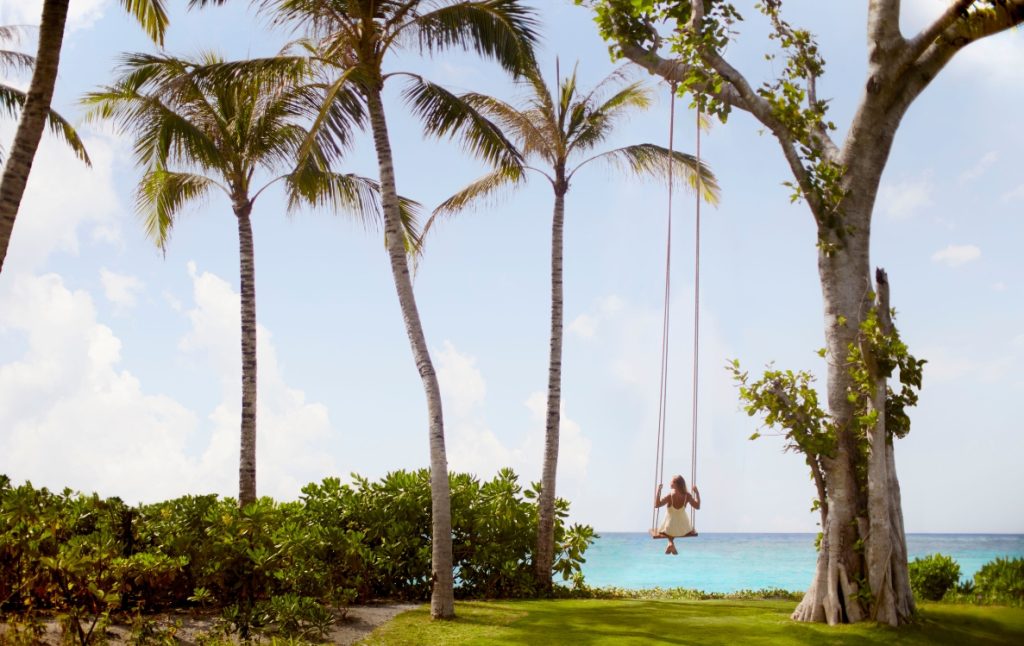
At The Ritz-Carlton Maldives, Fari Islands, luxury is not defined by spectacle, but by rhythm. In thoughtful design, intuitive service and the sense that every moment flows naturally into the next.
Here, island life moves in a circle. And once you fall into its rhythm, it becomes surprisingly difficult to leave.